





Salted cod
If you come to our museum one of those days now when the weather is dry, you will notice the fish on the ground beside the Towerhouse. This is salted cod.
In the 19th century, dried and salted cod became Iceland´s biggest export product. It quickly became the foundation of Ísafjörður merchants in foreign markets until well into the 1940s, when frozen fish replaced it. Ísafjörður´s growth and prosperity were built primarily on the processing and export of salted fish, with large areas of the spit dedicated to fish drying grounds.
During the summer the men caught the fish at sea, while women, children, and the elderly processed it on land. After the fish was landed, the washing women took over, trimming and cleaning away nape blood and membranes. The fish was then thoroughly washed with straw brushes. Finally, it was rinsed before being moved to the drying grounds for salting.
On the drying grounds, the salters took the fish, stacked it in piles, and salted it. It was stored like this for approximately 2 weeks until the spreading began on sunny or dry days. The fish was spreaded on stones or low wooden frames and in the evenings it was restacked and covered with canvas to protect against rain.
As summer progressed, attention turned to the final preparation of the salted fish for export. The first step was to check how dry it had become. If the fish was held up to the sun with one hand and the fingers of the other hand could be seen through the nape, it was considered fully dry. The same applied if it remained straight when held horizontally by the tail. After drying, the fish was moved indoors and stacked by size into large fish, medium fish, and small fish. It was then loaded onto merchant ships that transported it to foreign markets. Spaniards and Portuguese were the main buyers, but the Spanish market closed when the civil war broke out in that country in 1936. This was a significant blow to the fish processing industry in Iceland, but it wasn´t long before new method, quick freezing, gained prominence and became the main fish processing method in Iceland.
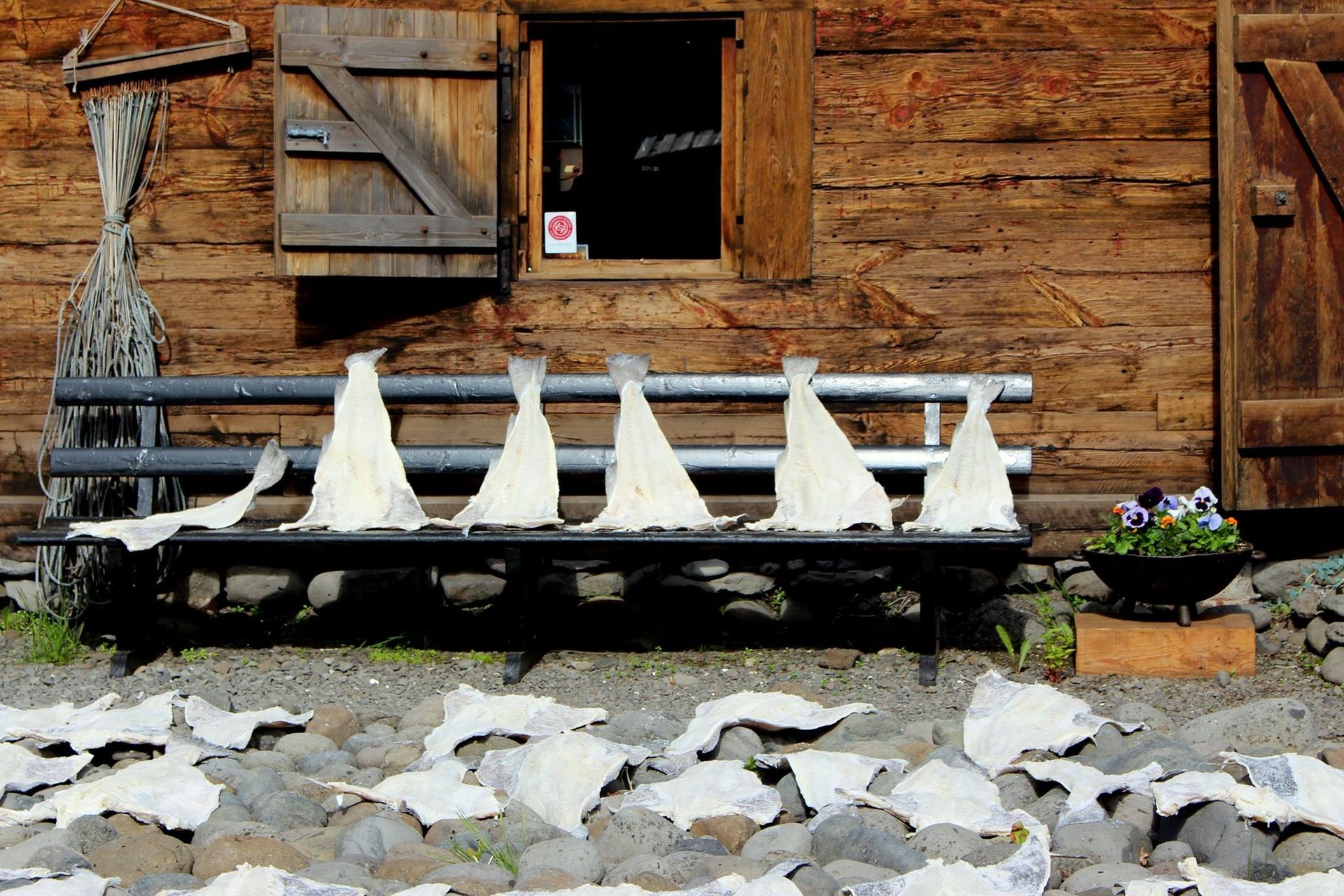
Salted and sundried cod