


The Cod Wars 1952–1976
In 2016, 40 years had passed since the end of the last Cod War. The origins of the Cod Wars can be traced back to the Continental Shelf Act of 1948, and Iceland’s fishing jurisdiction was extended to 4 nautical miles in 1952. Foreign nations, particularly Britain, had long conducted extensive fishing around Iceland, and their interests were now at risk. A ban on trawling by foreign vessels within 4 miles was introduced, provoking a strong reaction. England imposed a landing ban on Icelandic fish. The dispute between the countries was resolved through a landing agreement in November 1956.
In 1958, Iceland extended its jurisdiction to 12 miles, causing some tension between Iceland and the foreign nations that had been fishing in Icelandic waters, particularly Britain. An agreement resolving the dispute was reached in the first half of 1961. British trawlermen claimed that this first true Cod War had ended in a “great victory for Iceland”.
In February 1973, Iceland extended its jurisdiction to 50 miles. Disputes between Britain and Iceland arose once again, both politically and on the fishing grounds, where British warships and tugboats used their superior force against Icelandic Coast Guard vessels. During this Cod War, Iceland used for the first time the secret weapon that many say made all the difference: the notorious trawl-wire cutters. In total, the gear of 82 trawlers was cut during this Cod War—66 British and 16 West German. An agreement resolving the dispute was reached in November 1973.
On 15 October 1975, Iceland extended its fishing jurisdiction to 200 miles. British frigates and tugboats were sent to the fishing grounds to protect the British trawlers. The trawler captains did not consider this protection adequate, and on 5 May 1976 they sailed outside Icelandic territorial waters in protest. They were then turned back and informed that the British escort vessels had been authorised to “tear the Icelandic Coast Guard vessels to pieces” and do whatever was necessary to allow the trawlers to fish in peace. The British also sent Nimrod aircraft to spy on the Icelandic Coast Guard vessels and monitor their positions. During this Cod War, 54 collisions between British escort vessels and Icelandic Coast Guard vessels were recorded, and the frigate HMS Falmouth made a fierce attack on the Coast Guard vessel Týr, with the explicit intention of sinking it. This was the most serious collision in the history of the Cod Wars. The gear of 48 British trawlers was cut during this Cod War. The Icelandic Coast Guard crews, as well as Icelandic politicians and the Icelandic negotiating committee, showed great determination, which eventually led to an agreement being signed on 1 June 1976 allowing British trawlers to fish temporarily within Icelandic territorial waters for six months. On 1 December that same year, the British trawlers sailed outside Iceland’s jurisdiction.
The Cutters – the Icelandic Coast Guard’s secret weapon
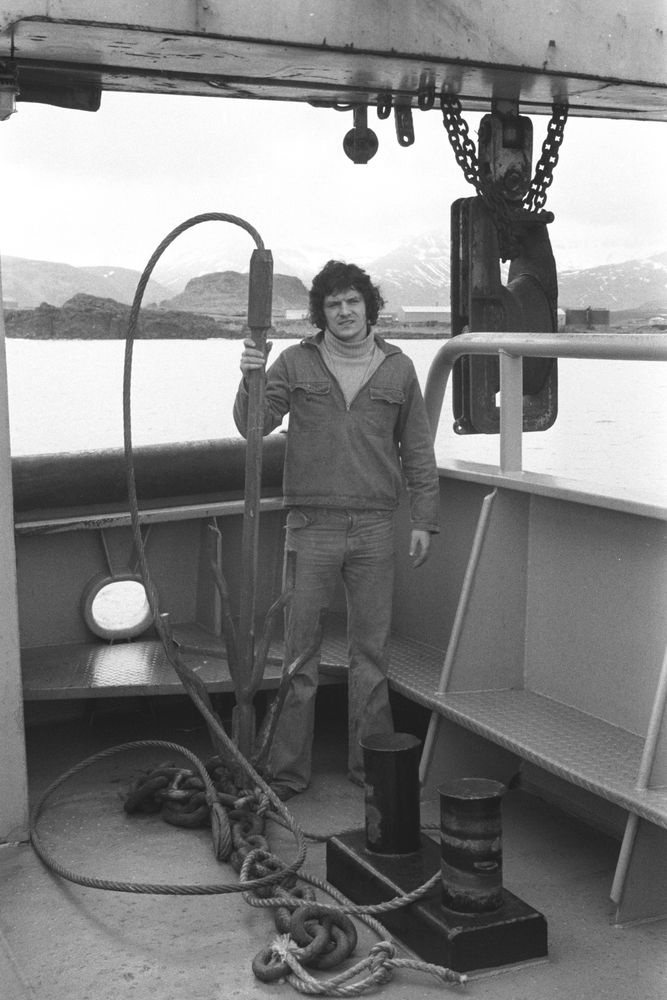
What the British trawler captains feared most were the notorious trawl-wire cutters, which the Icelandic Coast Guard used extensively during the last two Cod Wars. The cutters were designed by Pétur Sigurðsson, Director General of the Icelandic Coast Guard, and made by blacksmiths Friðrik Teitsson and Tómas Sigurðsson. The British warships and tugboats did everything they could to protect the trawlers from the cutters, but the Icelandic Coast Guard vessels were nimble and quick to manoeuvre, and the men at the helm were highly resourceful. The Coast Guard vessels often managed to slip between the escort vessels and the trawlers and cut one or both trawl wires. The first cutters were made in 1958, but were not used until the 50-mile Cod War in 1972. The first trawler to have its gear cut was Peter Scott H-103, a British trawler fishing 38 nautical miles west of Horn. The cutters were also used extensively during the 200-mile Cod War in 1975. Using the cutters, the Coast Guard vessels could sever a trawler’s fishing gear almost without warning if they managed to get close enough, putting the vessel out of action for a while. Great secrecy surrounded this useful Coast Guard tool. For example, the cutters were once taken to Vélsmiðjan Þór in Ísafjörður for repairs. The police drove the cutters to the workshop, and two Coast Guard crewmen stood guard over the repairmen while the work was carried out.
The exhibition panels can be seen below.